
Sustainable Synthesis and Catalysis
The Dell’Amico Research Group is dedicated to solving complex synthetic challenges through the lens of sustainability. Our core mission is to design and develop novel chemical transformations that minimize environmental impact while maximizing molecular complexity. By merging the principles of organocatalysis with the untapped potential of photochemistry, we grant access to previously elusive reactivity pathways. Our research provides the synthetic community—and the pharmaceutical industry—with robust, metal-free platforms to construct highly functionalized, biologically relevant scaffolds.
Asymmetric Organocatalysis
Small chiral organic molecules offer a powerful, metal-free alternative for catalyzing innovative synthetic transformations. Our group leverages both covalent (e.g., iminium/enamine activation) and non-covalent (H-bonding) enantioselective catalysis to build complex, three-dimensional chiral architectures from simple starting materials.
Recently, we have focused on pushing the boundaries of traditional polar reactivity by bridging organocatalysis with photochemistry. By unlocking the excited-state reactivity of catalytic intermediates, we can drive asymmetric transformations—such as dearomative photocycloadditions and radical functionalizations—that are fundamentally inaccessible under standard thermal conditions. This allows us to access new chiral bioactive ingredients with exquisite stereocontrol and virtually complete atom economy.
Mechanistic Investigations
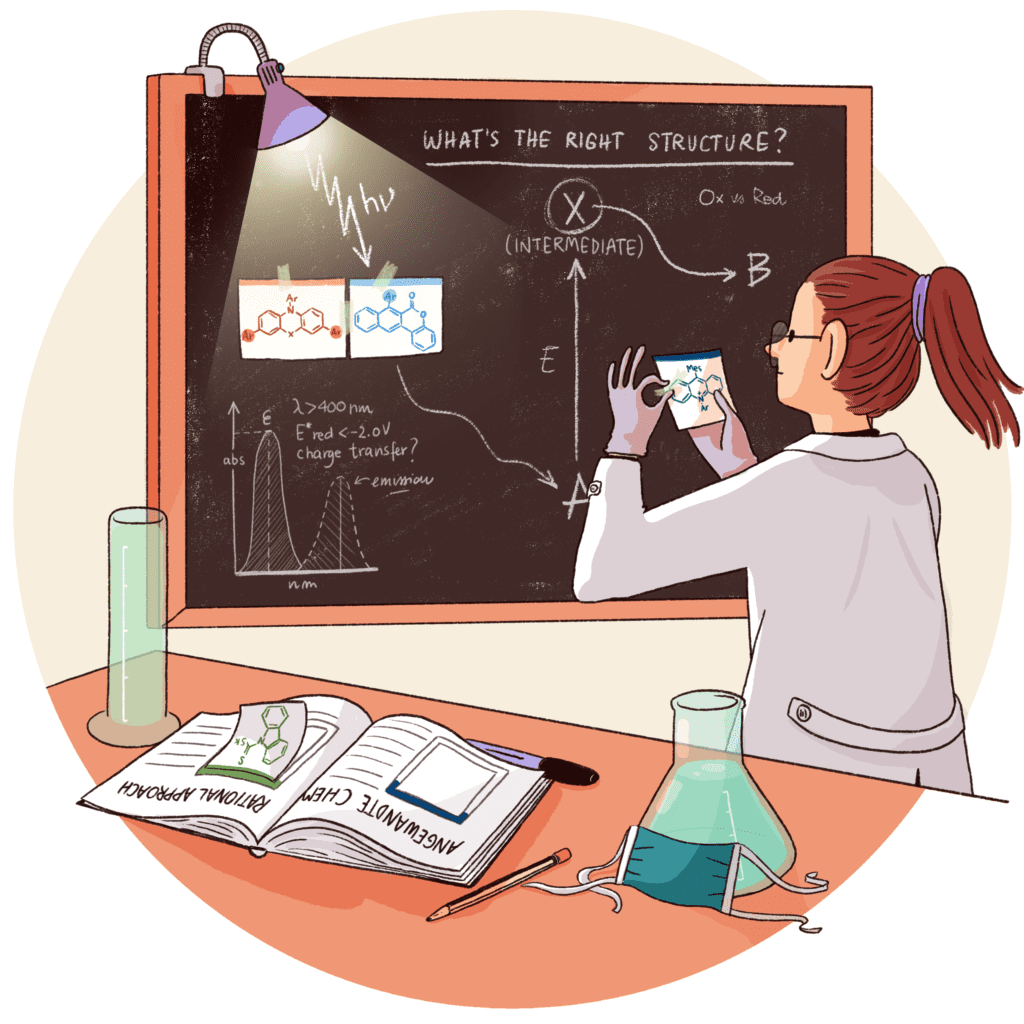
Rational design of new catalysts and reactions is impossible without a deep understanding of the underlying physical chemistry. In our lab, “how” a reaction works is just as important as the final product. We utilize a wide array of advanced spectroscopic and analytical techniques to elucidate the intimate nature of diverse polar and radical processes.
Through the use of transient absorption spectroscopy, EPR experiments, Stern-Volmer quenching studies, and Density Functional Theory (DFT) calculations, we unfold complex reaction networks. By characterizing short-lived radical species and key intermediates—such as Electron-Donor-Acceptor (EDA) complexes and exciplexes—we can rationally tune reaction conditions (like light wavelength or steric bulk) to completely control the chemo-, regio-, and diastereoselectivity of our synthetic methods.
Photocatalysis & Radical Chemistry
Photocatalysis allows unique reactivity pathways by harnessing light to generate highly reactive open-shell intermediates under exceptionally mild conditions. A major thrust of our group is the design of purely organic, bimodal photoredox catalysts. By replacing precious, toxic transition metals (like Iridium or Ruthenium) with rational, organic Donor-Acceptor (D-A) architectures, we develop more sustainable and cost-effective synthetic platforms.
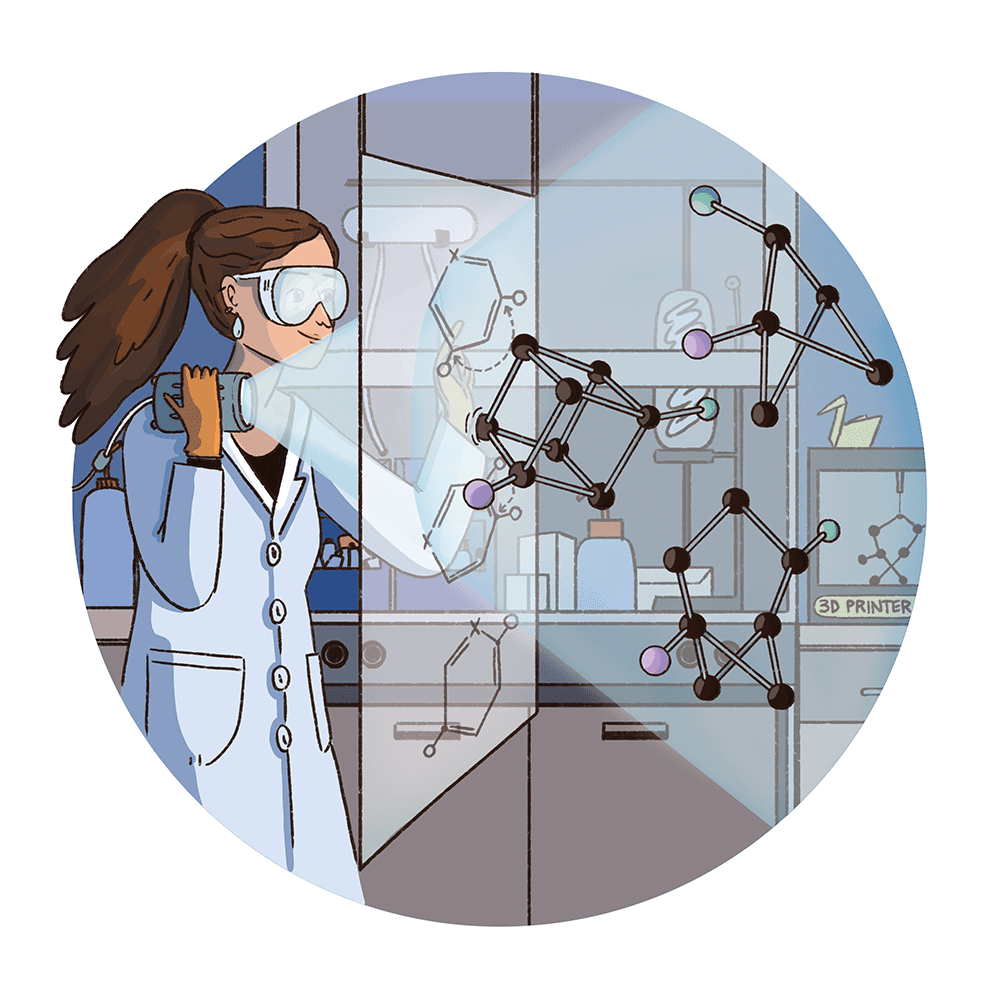
Our recent breakthroughs include the exploitation of radical strain-release mechanisms to construct densely functionalized azetidines from bicyclobutanes, and the synthesis of three-dimensional bioisosteres (like bicyclopentyl C-glycosides and CF₂-bicycloalkanes) that enhance the physicochemical properties of drug candidates. Furthermore, we actively implement our light-driven methods under continuous-flow microfluidic conditions, ensuring our protocols are scalable, highly efficient, and ready for industrial application.